Founder
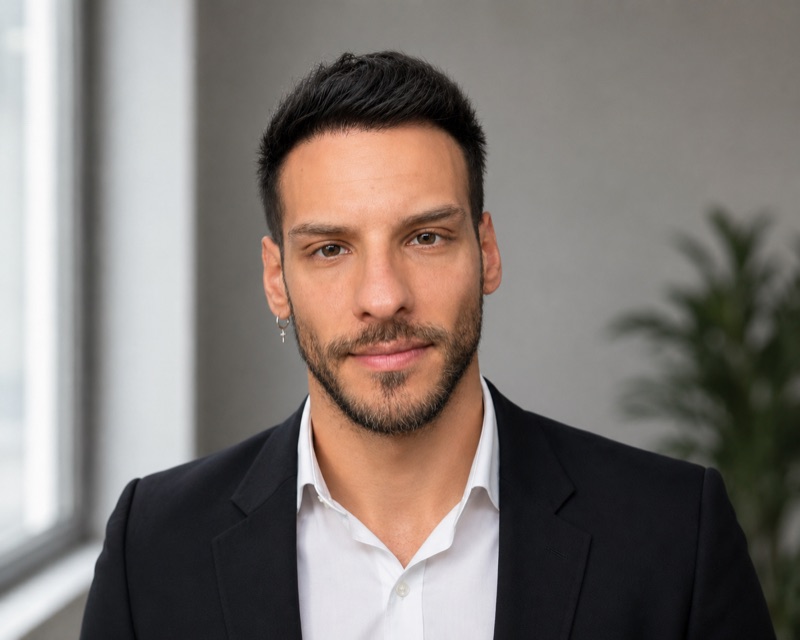
Giovanni Di Mauro, PhD
Founder, Delvant - Vienna
PhD Organic Chemistry, University of Vienna - MSc & BSc, Italy
PhD organic chemistry, University of Vienna (Maulide group). Builds audit-grade clinical intelligence for biopharma medical affairs and life-sci investors. Every Delvant deliverable is personally scoped, verified, and signed off before it ships.
PhD Organic Chem Vienna IT / DE / EN EU AI Act Art 4 deployerWhy Delvant exists
Small and mid biotechs hit the same wall around clinical decision moments: pre-launch positioning, lifecycle re-reads, BD diligence, scenario-planning for a competitor readout. The internal headcount is not there. The big consultancies sell six-week engagements at six figures, with junior analysts doing the synthesis on top of recycled databases. The boutique firms hide pricing and methodology.
Delvant is the answer I wanted to exist when I was reading those reports from the buyer side: fixed scope, fixed fee, audit-format methodology, every claim tagged with its evidence tier, every source locked to a primary registry, every report personally signed by the person who built it.
What I bring to a Delvant engagement
Not slogans. The specific things I do on every report that an agency cannot match at this price point.
- I read the primary papers. PhD scientific training, Maulide lab. Phase II and III readouts are parsed at source, not summarised from a database wrapper.
- I read regulator materials at source. EMA, EHA, EULAR, AIFA in English and Italian without translation latency. German-language regulator material (BfArM, Austrian agencies) handled with translation review.
- I personally sign off every PDF. The provenance tag on every claim is one I placed and can defend. There is no junior analyst layer between scope and delivery.
- I will say "no" to a question that cannot be answered cleanly on public evidence. Big vendors absorb that ambiguity into a billable workstream. Delvant returns scope, or restructures it.
- Every claim ships with an evidence tier. RCT, Indirect, RWE, Editorial, Underpowered, No data. Unsupported analytical steps are surfaced as
MATERIAL GAP, not silently filled. - EU AI Act Article 4 posture is documented. AI assistance is disclosed on every public surface and every PDF methodology page. Client data is never used to train external models.
Credentials
Doctoral training
PhD organic chemistry, University of Vienna (Maulide group, Institute of Organic Chemistry). Mechanistic synthesis, in-silico drug design, computational mechanism modelling. Visiting researcher at Houk lab, UCLA.
Sector context
From 1 July 2026: customer-success role at a Vienna clinical imaging AI company (separate employer). Embedded in the European clinical-AI sector during the Delvant pause, not LARPing it from outside.
Languages
Italian (native), English (C2), German (B2, working proficiency). EMA, EHA, EULAR, AIFA materials read at source in English and Italian; BfArM and Austrian regulator material handled with translation review.
Methodology stack
Per-claim evidence-tier tagging. Locked anchor source set (EMA, FDA, CT.gov, EHA, ASH, EULAR, AACR, ASCO, ESMO, PubMed). Gate A / B / C verification chain. Originality.ai plagiarism scan on every deliverable.
Research background
The training that shaped how Delvant reads evidence. Not directly clinical, but mechanistic and quantitative at depth that transfers cleanly to parsing trial readouts and competitive evidence.
Doctoral work in the Maulide group (Institute of Organic Chemistry, University of Vienna) centred on mechanistic organic synthesis: designing and validating new bond-forming reactions, isolating intermediates, building mechanistic proposals from kinetic and spectroscopic evidence, and defending them against alternative mechanisms. That work taught a habit that turns up everywhere in Delvant deliverables: any analytical step that cannot be defended against an alternative mechanism is flagged, not buried.
Alongside the synthetic work, the PhD included an in-silico drug-design strand: structure-based ligand design, conformational search, DFT calculations on small-molecule reactive intermediates and protein-ligand modelling for series prioritisation. The point of that strand was not to publish a virtual-screening pipeline; it was to put a quantitative layer next to a wet-lab hypothesis and force the two to either agree or expose where the model was too coarse. The same posture sits inside Delvant's evidence-tier system. A claim that survives only because the model is too coarse is not a Sourced claim; it is a Hedged claim, and it ships with that label.
A research visit at the Houk lab at UCLA extended the computational side: transition-state modelling of organic mechanisms under K. N. Houk's group, applying DFT and post-Hartree-Fock methods to mechanism questions raised by wet-lab work in Vienna. No publication came out of that visit. The methodological habit did: build a quantitative model, state where it can be falsified, and accept that a model that cannot disagree with reality is not a model. That habit is the same one a buyer should expect from a Delvant analytical step, regardless of therapeutic area.
None of this training is clinical-affairs training. Delvant is explicit about that: it is not a clinician, not a regulatory affairs firm, not a CRO. What this training does provide is the ability to read primary biomedical literature at experimental depth, distinguish a real comparative claim from an apparent comparative claim, and recognise when a published trial conclusion outruns its actual evidence base. That ability is the core engine of the deliverable, and it is what justifies the per-claim evidence-tier discipline rather than the trust-me-it-is-good-research posture sold by larger vendors.
Direct line, no procurement layer
Delvant is one person and a documented methodology. That is the point, not a limitation. There is no account manager rotation, no junior analyst handoff, no agency-side scope creep. The person who reads your question is the person who reads the papers, builds the model, writes the PDF, and signs it.
If the question is outside Delvant's tier coverage, I will say so on the first call. If a Phase III readout has just landed and changes the framing, I will tell you before scoping. The published methodology and sample report are deliberately open so the buyer can verify both before any contract.
What I will not do
Personal hard rules
- No single-asset hit pieces. Assets are framed inside the full competitive set.
- No investment recommendations. Delvant is not a regulated investment advisor.
- No medical advice, no clinical guidance, no regulatory submission ghostwriting.
- No identified KOL critique on public surfaces. KOL inputs are anonymised by default.
- No re-use of one client's data, framing, or analytical model on another client's engagement.
- No overclaim. Every analytical step is tagged or surfaced as a gap. Confidence is not borrowed from confident phrasing.
30 minutes is enough to know if Delvant fits
Bring one open clinical-evidence question. I will tell you which tier fits, or that none of them do. No deck, no proposal, no obligation.
Book a 30-minute call View public sample